
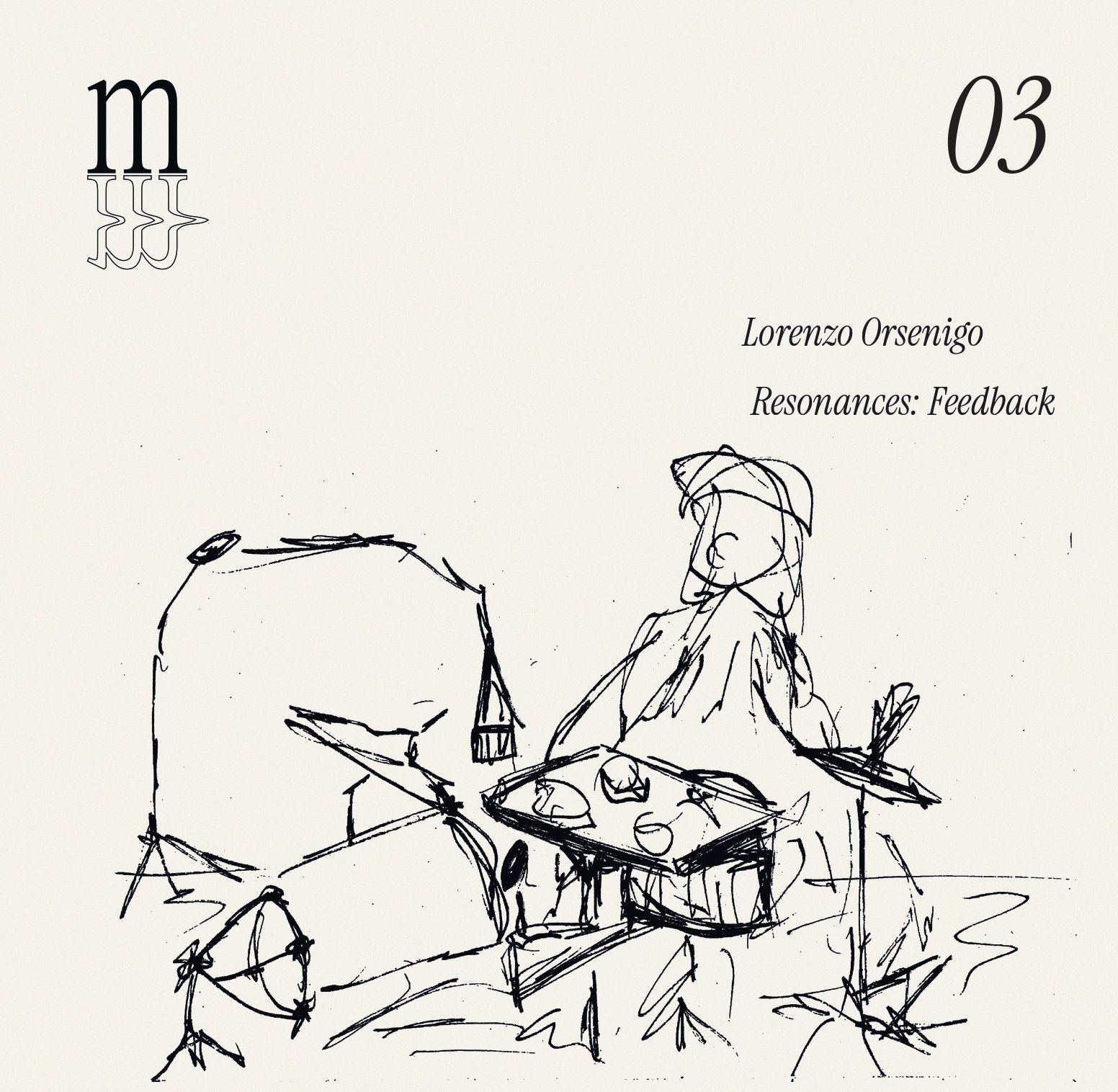
Resonances: Feedback
The words of composer and electronic music pioneer David Tudor reflect a central idea behind 'Resonances:Feedback': an exploration of the sonic possibilities that emerge through the interaction of percussion instruments, microphones, loudspeakers, and transducers.
“I try to find out what's there - not to make it do what I want, but to release what's there. The object should teach you what it wants to hear.” [1]
When a microphone picks up the sound of a loudspeaker and feeds it back into the system, a feedback loop is created. Rather than treating feedback as a technical malfunction, I approach it as a musical process through which sounds and resonances emerge that might otherwise remain unheard.
Microphones, loudspeakers, and transducers interact with the percussion instruments as part of a larger sonic system. These interactions alter the instruments' sound and function, producing unexpected resonances and changing how they can be heard and played.
As a performer, what interests me most is the unpredictability of this process: feedback is never quite the same twice, and the interactions between instruments and electronics constantly change the conditions in which I play. This calls for attentive listening, continuous experimentation, and a willingness to adapt and respond to what unfolds in the moment.
[1] David Tudor and Victor Schonfeld, "From Piano to Electronics," Music and Musicians 20 (August 1972), pp. 24-26.
Credits
Released November 12, 2026
Lorenzo Orsenigo, Percussion & Electronics
Benedikt Alphart, Producer & Sound Engineer
Special thanks to all the composers for writing new works especially for this project and joining the recording sessions!
Recorded in September & October 2026 in Graz, Austria
Illustrations by Lorenzo Orsenigo and Juta Pranulytė
Photos by Benedikt Alphart
CD Packaging designed by Alma Tolleson
© murmurs 2026
License
All rights reserved.